Zhoyi Intelligence, an enterprise providing intelligent unmanned system solutions, has completed a B-round financing of 250 million yuan.
According to public information, this round of financing was invested by institutions such as Zhongguancun Science City Company, AVIC Rongfu, Shaanxi Photon Strong Chain, Guangdong Kaiding, and Shenzhen Suiyin. The funds will be mainly used for product research and development, market expansion, and production capacity enhancement.
It is worth noting that when reviewing the financing information in the robot industry in 2023, the highest amount of financing went to the drone enterprise United Aircraft. Now at the beginning of 2024, drones have once again kicked off the year with a bang. Let's take a look at the specific situation together.
The protagonist of this financing is Beijing Zhuoyi Intelligence Technology Co., Ltd. (hereinafter referred to as "Zhuoyi Intelligence"), a company specializing in providing intelligent unmanned system solutions.
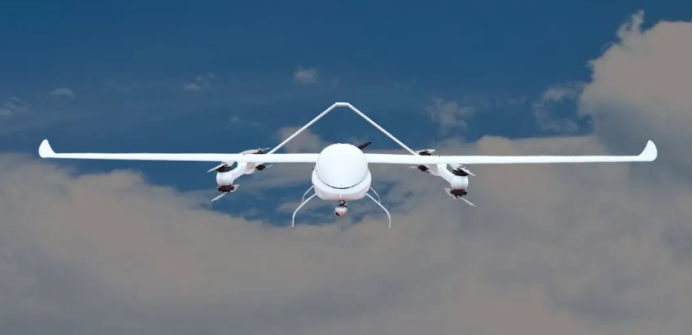
Founded in 2015, Zhuoyi Intelligence's founder Ren Xuefeng graduated from Beihang University, one of the "Seven National Defense Universities". He has been deeply involved in the field of drones for several years, with extensive experience in flight control and flight simulation research. He is one of the founders and leaders in the tethered drone industry in China. According to the company's introduction, Zhuoyi Intelligence has two product lines: one is unmanned equipment, including tethered drones, multi-rotor drones, vertical take-off and landing fixed-wing drones, and loitering munitions. Among them, tethered drones are the core product and are mainly used in military, emergency rescue, firefighting, and energy inspection areas.
The other is the scientific research brand "Feisi Lab", which has collaborated with more than 300 universities and research institutions to provide them with development tools for intelligent unmanned systems. It provides an integrated design and development platform for research, design, simulation, and testing of intelligent unmanned systems, including flight control, visual navigation, cluster coordination, and intelligent game theory technology.
Currently, Zhuoyi Intelligence has become a partner in unmanned systems for many military units, including Aviation Industry Corporation of China, China North Industries Group Corporation, China South Industries Group Corporation, China State Shipbuilding Corporation, and China Electronics Technology Group Corporation.
In the second year of its establishment, Zhuoyi Intelligence successfully obtained angel round financing. Even after entering the capital winter in 2022, Zhuoyi Intelligence still successfully completed a multi-million financing round. Now, with the completion of the B-round financing of 250 million yuan, its strength should not be underestimated.
Speaking of strength, its products possess reliable technological capabilities that meet military requirements.
The company started by engaging in military projects and was deeply involved in the earliest tethered drone military equipment models for the army, navy, and armed police. Later, it began to transition to civilian scenarios and obtained all military qualifications for drone aircraft and accessories.
Originally, drones were mainly used in military fields.
The birth of drones can be traced back to the First World War. At that time, aircraft were still in their primitive powered state and required personnel control and operation to maintain stability.
In 1917, Peter and Elmer invented the automatic gyro stabilizer, which could balance the aircraft during flight, marking the birth of unmanned flight. This new technology was used to successfully transform the Curtiss N-9 trainer of the US Navy into the first radio-controlled aircraft.
The advent of the "Queen Bee" in 1935 marked the true beginning of the era of drones, and it is considered the pioneer in the history of drones. The invention of the Queen Bee enabled drones to return to their takeoff points, and the Queen Bee even served in the Royal Air Force of the United Kingdom until 1947.
Subsequently, drones were used in various battlefields to perform reconnaissance tasks. However, due to the backwardness of science and technology at that time, drones sometimes failed to complete tasks well, leading to their gradual neglect and even abandonment by the military.
After the Second World War, with the advancement of electronic technology and the demand of war, the performance of drones continued to improve, and their uses became increasingly widespread.
By the 1980s, Israel pioneered the cooperative combat of drones and manned aircraft, gradually unlocking the value of drones. In the 1990s, General Atomics manufactured the MQ Predator drone. These drones were not only used for military reconnaissance but also for attack missions, becoming an important weapon in modern warfare.
In recent years, the application of drones in the civil market has gradually emerged, and the demand for industrial-grade drones has further increased.
According to statistics, as of 2022, the scale of China's drone market has reached 106.5 billion yuan. Among them, the civil drone market size is approximately 97.9 billion yuan, and the military drone market size is approximately 8.6 billion yuan.
In terms of regional distribution, China's civil drone enterprises are mainly concentrated in the Pearl River Delta, Yangtze River Delta, Beijing-Tianjin-Hebei, and other regions. DJI, Guangdong XAG, AVIC (Chengdu) Drone, and other civil drone enterprises have entered the forefront of the international market in terms of innovation and profitability.
Looking at the entire industry, listed drone companies are mainly military drone manufacturers, and the civil drone industry, which has started in recent years, has not yet entered a period of intense listings. However, drone technology has now been widely used in various fields such as rescue, agriculture, logistics, and food delivery. In the future, with the continuous development of artificial intelligence, drones will bring even broader application prospects to people's lives.
Article Source: China Robotics Network.